
Portfolio developers managing 5+ active projects face a silent killer: inventory stagnation on some projects while others sell out. Here's the exact framework top developers use to accelerate sales velocity across their entire portfolio—without margin-crushing discounts.
The Portfolio Developer's Dilemma
You've built a portfolio of premium real estate projects. Project A is selling at record pace. Project B, launched 8 months ago, has inventory stalled. Project C is positioned as luxury, but buyers are comparing it to Project A and choosing the cheaper option.
This is the portfolio paradox: when developers have multiple projects in the same market, buyers see them as interchangeable alternatives rather than distinct propositions. The natural response? Cut prices. But that erodes margins on your strongest projects, confuses your brand positioning, and leaves you chasing volume instead of profit.
The data tells the story: portfolio developers who rely on discounting to move inventory see 15-25% margin erosion year-over-year. Those who don't? They sell out 40% faster by fixing the root problem: unclear differentiation and weak visual positioning.
Why Portfolio Inventory Stalls (It's Not What You Think)
Most portfolio developers assume slow-moving projects fail because:
- Wrong location
- Wrong price point
- Wrong buyer segment
But the real reason? Buyers can't see the difference between your projects visually or narratively.
When a buyer opens your website, they scroll through a grid of generic renders. Project A looks like Project B. Project B looks like Project C. They can't tell which one is supposed to be luxury, which one offers value, or which one solves their specific need. So they default to price—and pick the cheapest.
Top-performing portfolio developers fix this with a three-layer visibility strategy:
- Layer 1: Visual Hierarchy. Each project gets a distinct visual language.
- Layer 2: Positioning Clarity. Each project tells a different buyer story.
- Layer 3: Experience Differentiation. The sales experience reinforces positioning before the conversation.
Layer 1: Visual Hierarchy—Make Each Project Unmissable
The fastest way to accelerate portfolio inventory is to make each project visually distinct. This doesn't mean brand inconsistency—it means strategic emphasis.
For example:
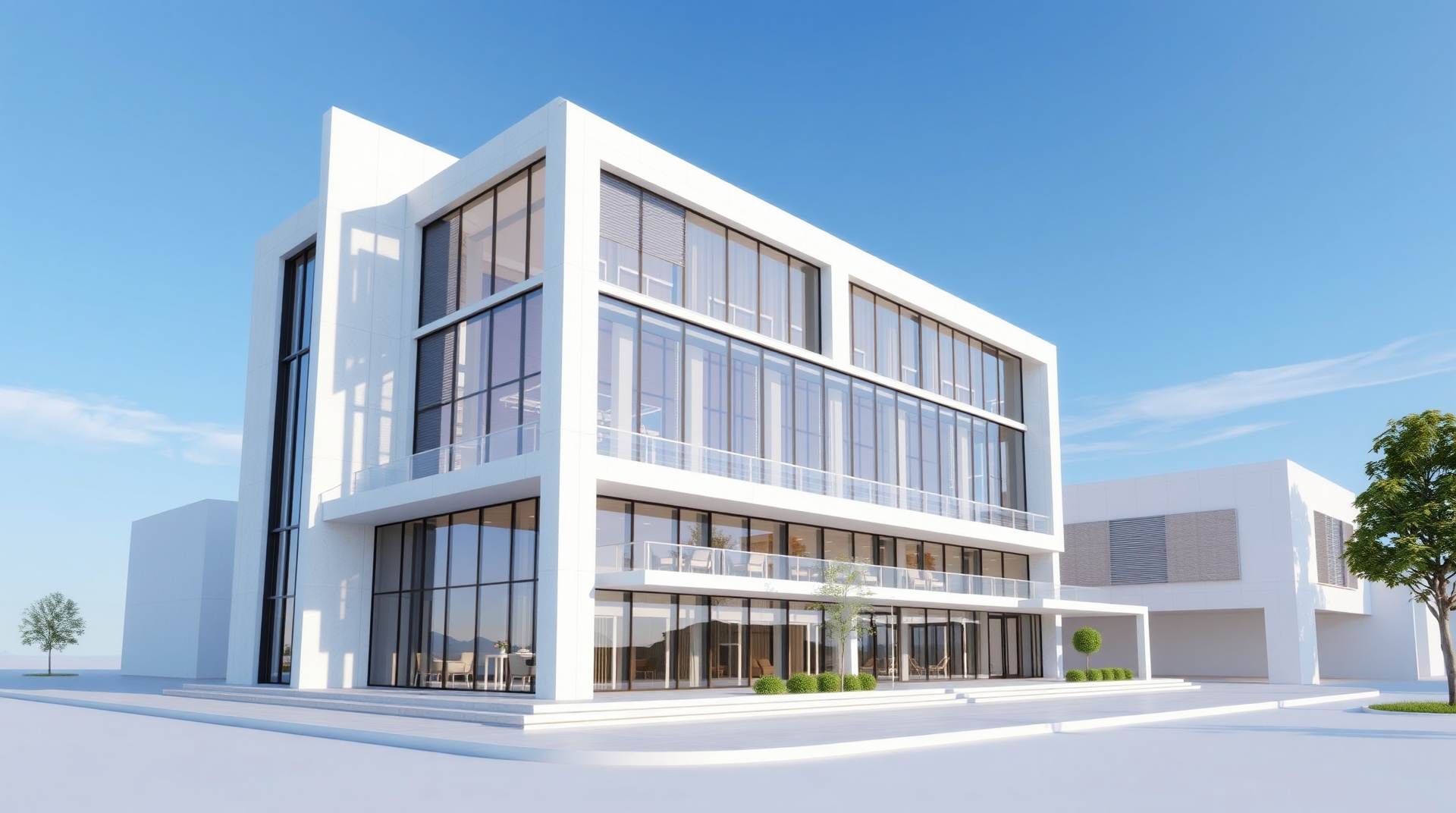
- Premium luxury project: Lead with high-end 3D architectural renders showing interior finishes, amenities, lifestyle imagery.
- Value/affordable project: Lead with 360 VR tours showing scale, layout clarity, and unit type variety.
- Mixed-use/commercial: Lead with cinematic 3D walkthroughs showing connectivity, street-facing visibility, and anchor tenant locations.
This isn't about spending more on each project—it's about spending smarter. A luxury project doesn't need VR tours; it needs renders that scream premium. A value project needs clarity, not luxury renders.
Layer 2: Positioning Clarity—Each Project Solves a Different Problem
Portfolio developers who sell fast never compete on price because they don't position their projects as competitors to each other. Instead, they position them for different buyer segments.
Example positioning framework:
| Project Type | Primary Buyer | Positioning Story |
|---|---|---|
| Premium/Luxury | HNI, second home, investment | "Exclusivity. Premium finishes. Investment grade." |
| Value/Affordable | First-time buyer, young professionals | "Smart buy. Connectivity. Future appreciation." |
| Mid-segment/Family | Growing families, investors | "Space. Schools nearby. Community." |
When each project tells a different story, buyers self-select. HNI buyers see the luxury project and bypass value projects. First-time buyers see the value project and bypass luxury. No price comparison happens—because they're not competing for the same buyer.
Layer 3: Experience Differentiation—Sales Office Strategy
The sales gallery is where positioning becomes real. This is where visual differentiation matters most.
Top portfolio developers use different visualization strategies for each sales office:
- Luxury project sales office: Features a high-detail architectural scale model as the centerpiece, showing premium finishes, amenities, and landscaping with museum-quality detail. Buyers touch the model, feel the scale, and visualize themselves in the space. Zero digital fatigue.
- Value project sales office: Uses VR headsets to walk buyers through every unit type in 5 minutes. No appointment needed. Buyers see scale, layout, and options fast. Reduces sales cycle from weeks to days.
- Commercial/mixed-use sales office: Displays location advantage videos showing connectivity, neighboring businesses, and street traffic patterns. Investors get data, not just renders.
Each gallery reinforces a different value proposition—before the sales team opens their mouth. This is why top developers sell faster: the visualization does the qualification.
The Budget Allocation Framework: Which Project Gets What?
Here's the framework portfolio developers use to allocate visualization budgets without overspending:
Project in high demand / early phase: Minimal visualization. Word-of-mouth works. Allocate budget to branding and collateral to cement positioning.
Project mid-sales / competitive market: Maximum visualization investment. Use 3D renders + 3D walkthroughs to create clear differentiation. This is where a 2x visualization spend yields 5x sales lift.
Project post-occupancy / resale: Focus on social proof videos and VR tours to show real occupants and completed finishes. Buyers need confidence, not renders.
Slow-moving inventory / repositioning: Aggressive visualization reset. New renders, new positioning narrative, new sales office experience. This is where scale models and VR tours can reduce time-to-sale by 6+ months.
Real Numbers: How This Accelerates Sales Velocity
Portfolio developers who implement this framework see measurable results within 90 days:
- Sales cycle reduction: Average 35-40% faster from first contact to booking.
- Inquiry-to-site visits: 45-50% of inquiries convert to site visits (vs. 25-30% without clear differentiation).
- Site visit-to-booking: 60-65% conversion (up from 35-40%) because positioning is clear before the conversation.
- Price discount reduction: 20-30% fewer discounting conversations because buyers aren't comparing projects.
The Avoid-at-All-Costs Mistakes
Mistake 1: Using identical visuals across projects. Generic renders for all projects, same UAV shots, same gallery layout. This trains buyers to see your portfolio as interchangeable and price-shop.
Mistake 2: Confusing differentiation with inconsistency. Using completely different branding, colors, and narratives for each project. Buyers lose trust in your brand.
Mistake 3: Underinvesting in slow projects. Starving a slow project of visualization budget to fund fast projects. This is backward. Slow projects need visualization investment most.
Mistake 4: Copying competitor positioning. If a competitor positions as luxury, don't try to undercut them as "luxury but affordable." Own a different positioning entirely.
The Bottom Line: Sell Faster, Not Cheaper
Portfolio developers who sell 40% faster do one thing consistently: they make each project visually and narratively distinct. Buyers see clear differentiation, self-select based on their needs, and skip the price-comparison phase entirely.
This isn't about spending more. It's about spending on the right visibility for each project's life cycle. Luxury projects get premium renders. Value projects get clear VR tours. Mixed-use projects get connectivity videos. Each positioning gets reinforced in the sales gallery with the right experience—scale models, VR, renders, or video.
The result? Stalled inventory accelerates. Margins stay intact. And your sales team closes deals based on value, not desperation.
What to Do Next
Start with one project. Map its positioning (who is this for, what problem does it solve?). Then align its visuals to that positioning. If it's luxury, lead with renders. If it's value, lead with VR. If it's mixed-use, lead with location videos.
You'll see inquiry quality shift immediately. Within 30 days, booking velocity accelerates. Within 90 days, you'll have benchmarks to scale this across your entire portfolio.
Ready to Accelerate Your Portfolio Sales?
We help portfolio developers implement this framework with custom 3D renders, 3D walkthroughs, scale models, and VR experiences that differentiate each project.
Get Your Portfolio Strategy Audit →Related Services
3D Architectural Renders
Premium visualization for luxury project positioning
3D Walkthrough Videos
Cinematic tours for mixed-use and commercial positioning
Architectural Scale Models
Luxury sales gallery centerpieces for premium projects
Virtual Reality Tours
Fast-track buyer experience for value projects
Location Advantage Videos
Connectivity proof for commercial and mixed-use projects
Real Estate Graphics & Branding
Positioning collateral across portfolio